
President Trump’s decision to leave national parks open during the government shutdown is counter to those of previous administrations, and at least three people have died from accidents since the shutdown started.
As the government shutdown approaches the end of its second week, national parks have remained open, albeit with no staff, raising the risk of injury and lowering the chances of rescue for those who get hurt.
All three deaths were the result of accidents or falls and took place in a seven-day span.
On Christmas Eve, a 14-year-old girl from 700 feet at popular tourist attraction Horseshoe Bend Overlook in Arizona.
The next day, a man died at Yosemite National Park from a head injury after a fall.
In that instance, the man’s death went unreported for at least a week due to the fact that there were no workers in the pa.
Lastly, a woman died after a falling tree struck her in the Great Smoky Mountains National park, consistently the most visited park each year.
National Park Service spokesman Jeremy Barnum dismissed the concern, telling the Washington Post that deaths in the parks are not uncommon.
In 1995 and 2013, respectively, the Clinton and Obama administrations made the decision to close the parks altogether, not wanting to jeopardize the public’s safety in the parks.
Officials came to the conclusion that it would jeopardize public safety and the parks’ integrity to keep them open, but the closures also became a political cudgel for Democrats because they exemplified one of the most popular aspects of federal operations that had ground to a halt.
Diane Regas, president and chief executive of the Trust for Public Land, said the group has sent a letter to President Trump calling on him to close all national parks. In an interview Friday, she said administration officials may have underestimated the broad scope of what it takes to maintain these sites.
“I think we all know that not having bathrooms is a nuisance. What I think people forget is, not having adequate sewage treatment can be dangerous,” Regas said. “When you bring people together, running these parks is like running a small city.
“We are taking risks with some of our most treasured natural resources without knowing that we’re doing our best to protect people, that we’re doing our best to protect park resources,” she said. “When it comes to our national parks, I just don’t believe that’s acceptable.”
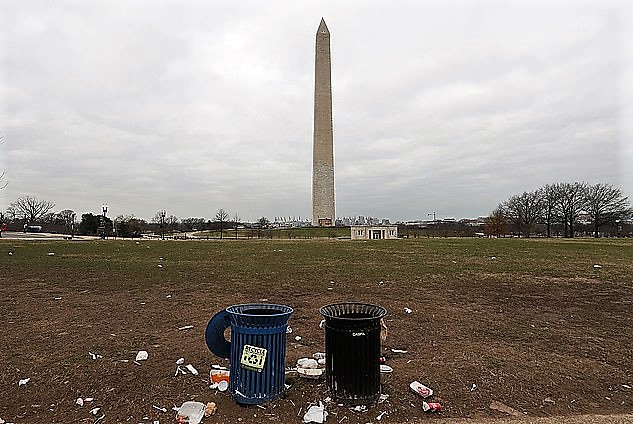
The parks have also been trashed during the partial shutdown with no workers there to clean up after visitors.