President Trump boasted about the ratings of his daily live news conferences on the coronavirus today, and suggested that the large viewer numbers — rather than the misleading remarks he has made during them — are fueling discussions in the media about ending the practice of broadcasting them live and unfiltered.
“Because the ‘Ratings’ of my News Conferences etc. are so high, ‘Bachelor finale, Monday Night Football type numbers’ according to the [New York Times], the Lamestream Media is going CRAZY,” Trump tweeted Sunday afternoon.
Because the “Ratings” of my News Conferences etc. are so high, “Bachelor finale, Monday Night Football type numbers” according to the @nytimes, the Lamestream Media is going CRAZY. “Trump is reaching too many people, we must stop him.” said one lunatic. See you at 5:00 P.M.!
— Donald J. Trump (@realDonaldTrump) March 29, 2020
Trump followed that tweet with four others that quoted a New York Times story that referred to the president’s daily briefings as “a ratings hit.”
But while Trump is framing the debate about whether his briefings should be broadcast live as stemming from envy or political ambition in the liberal press, in reality the arguments from columnists and staffers at CNN and MSNBC have centered on Trump showering the public with dangerous misinformation and spreading false narratives about the state of the coronavirus pandemic.
But it’s not about him, because as in all crisis situations the American people are tuning in to learn the latest information.
The coronavirus pandemic has caused an economic crisis, policy chaos at home and abroad, and widespread physical and mental suffering around the globe — it would make sense that millions are tuning in to hear the nation’s top officials provide clear, accurate information on the latest.
It’s precisely the critical importance of conveying accurate information in a time of crisis that has spurred many political analysts and members of the press to argue that it’s dangerous to present Trump’s words to the public through live broadcasts.
Trump has made dozens of false claims during the briefings, including overstating the potential of hydroxychloroquine as a treatment for Covid-19, and falsely saying that anyone who wants to be tested for coronavirus infections can get one.
Trump said today the administration’s coronavirus task force’s 15-day plan to reduce the spread of the disease is being extended 30 days, which is weeks past his Easter deadline.
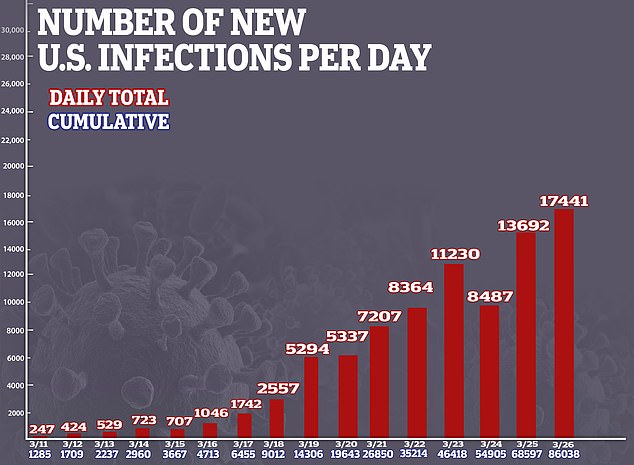
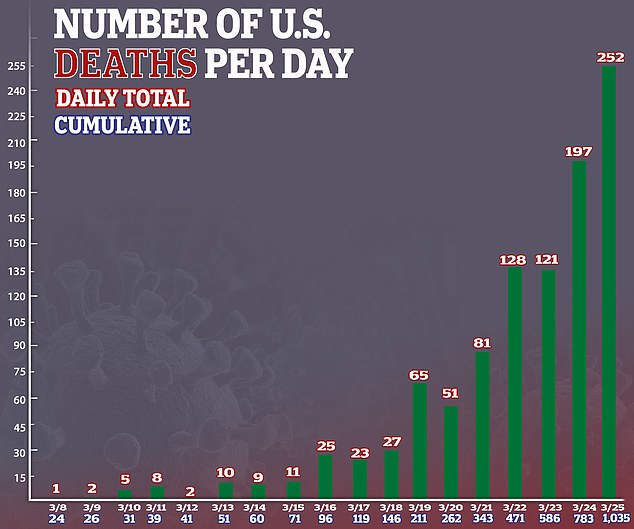
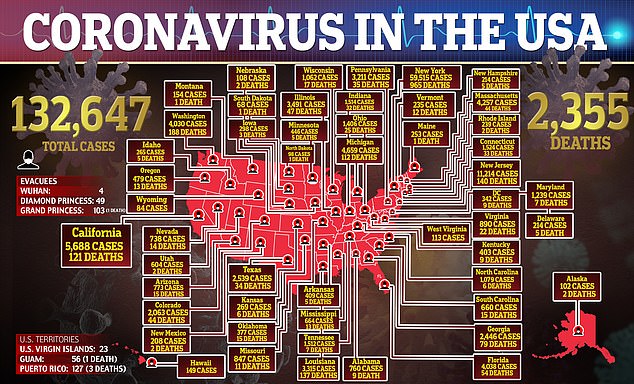
He also claimed during his daily press briefing at the White House today that the peak of coronavirus is expected to hit in two weeks, even though the death toll in the U.S. doubled from 1,000 to 2,000 in just one day.
‘The modeling estimates that the peak is likely to hit in two weeks. So, I’ll say it again: The peak – the highest point of death rates, remember this – is likely to hit in two weeks,’ Trump said during his remarks in the Rose Garden. ‘Nothing would be worse than declaring before the victory is won. That would be the greatest loss of all.’
Trump said last week that he was hoping the whole crisis would have blown over by Easter, which is April 12, but admitted today that that deadline was just an ‘aspiration’ and that Easter could end up being the ‘spike’ in deaths.
‘Was floating Easter a mistake?’ a reporter asked him after the president was finished making his prepared remarks.
‘No. It was just an aspiration. We actually will be hitting, potentially… on Easter we’re probably – that could be a peak. That could be a peak period. That could be the peak – sadly to say – that could be the peak number of deaths before it starts coming down. No, that was aspirational,’ he said.
Trump then imposed another artificial deadline, claiming he expected that by June 1 the U.S. would be in the midst of recovering from the virus and the economic turmoil it has brought along with it.
‘We can expect that by June 1 we will be well on our way to recovery. We think by June 1 a lot of great things will be happening,’ Trump told reporters gathered for the briefing – a few more than usual due to the outdoors setting.