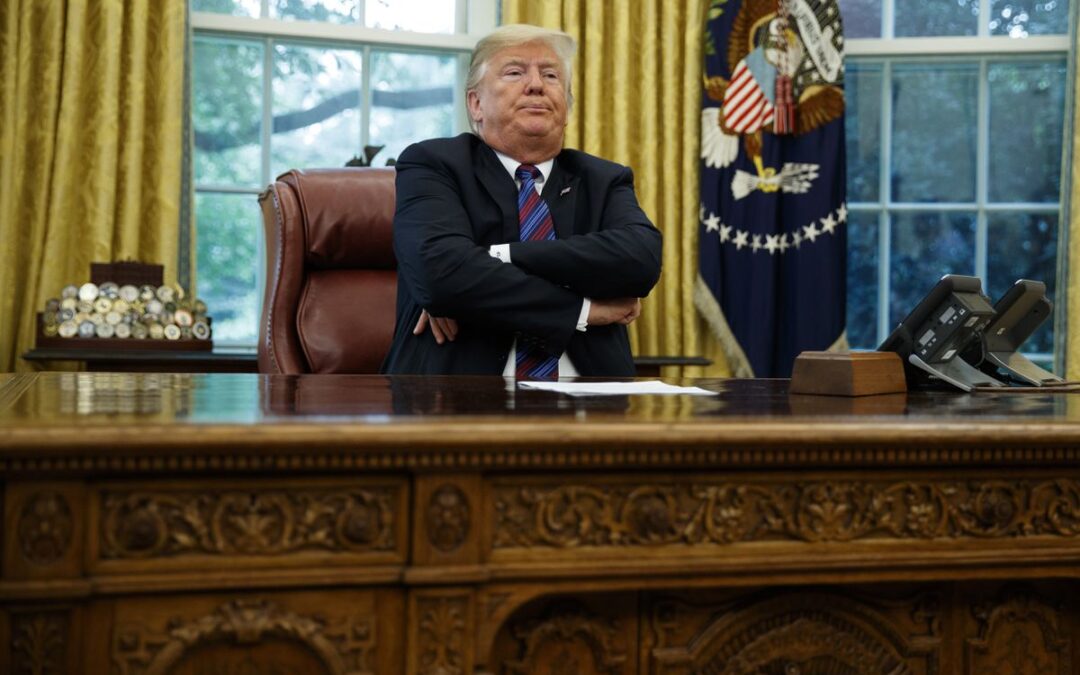
Donald Trump was soundly defeated by Joe Biden, his efforts to overturn the results have been wildly unsuccessful, and the electoral college has made his loss official.
Next week, lawmakers will meet to certify Biden’s win—and a longshot challenge Trump’s allies in the House are planning will not stop the inevitable.
Vice President Mike Pence will read out the numbers that show Trump’s 306 to 232 Electoral College defeat and announce that the votes ”shall be deemed a sufficient declaration” for the election of Joe Biden and his running mate, Kamala Harris.
Constitutionally and legally, Trump will have no constitutional or legal claim to the White House.
But what if, after all that, he tweets out that he’s not leaving?
That prospect may sound comically outlandish, perhaps better suited for reality TV.
But it’s hardly as far-fetched as it might seem, as Trump refuses to concede and continues to insist he won last month’s election in a “landslide.”
In fact, he has actually raised the idea with aides recently.
And while few advisers think he’ll actually go through with it, no one really knows what would happen if he does try to overstay his welcome.
While a defeated president’s refusal to step down would be unprecedented in American history, anxiety over how to keep a president’s power in check dates as far back as the 1787 Constitutional Convention.
“That was a source of tremendous discussion and concern,” says Rick Pildes, professor of constitutional law at the New York University School of Law.
“But I don’t think that the framers talked about or even imagined the possibility that a president would somehow try to stay in office beyond their term,” Pildes says, and as a result, the Constitution doesn’t specifically address such a scenario.
But it does protect against it.
During any president’s term, there are two avenues for removing them from office—impeachment and the 25th Amendment, which allows lawmakers to remove a president who is sick or otherwise unable to fulfill his or her duties.
Neither of these would apply if someone tried to overstay their term, because that person would no longer be president; U.S. presidents are limited under the Constitution to four-year terms that end on January 20 after an election year.
Constitutional History:
The length of the presidential term was the subject of vigorous debate at the Constitutional Convention in 1787.
Some delegates advocated for the presidency to last for three years, while others favored a seven-year term.
Alexander Hamilton—an ardent Federalist who believed in a strong, centralized government—even pushed for a lifetime term.
Hamilton’s idea was shot down by the rest of the delegates, who were loath to recreate a system similar to the lifetime monarchy against which they had just rebelled.
In his notes from the convention, James Madison described Hamilton’s suggestion as the equivalent of an “elective Monarch.”
Ultimately, the delegates compromised on a term of four years, enshrined in Article II, Section I of the Constitution.
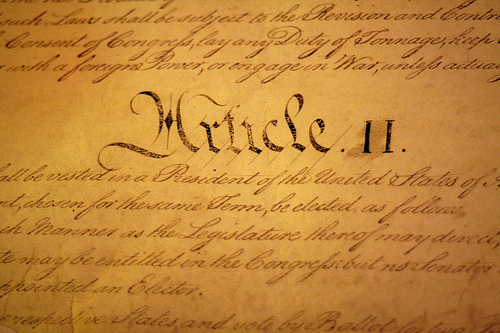
A U.S. president’s term technically ends on Inauguration Day.
For more than a century, presidential inaugurations took place in March, before they were moved to January 20 with the 1933 ratification of the 20th Amendment, which states that the president and vice president’s terms “shall end at noon” on that day.
Even if a president is reelected, there’s a clear line between his first and second term.
And ever since George Washington, reelected presidents have re-taken the oath of office on Inauguration Day.
On January 20, 2021, Joe Biden will be sworn in at noon EST, having won both the electoral college and popular votes by wide margins.
“I think the decisiveness of Biden’s victory is substantial enough to put to rest any doubt that he won,” says Lawrence Douglas, a professor of law, jurisprudence, and social thought at Amherst College and author of Will He Go?
Douglas says Trump’s many lawsuits challenging the election “are really meritless and frivolous, without any kind of realistic prospect of having any impact on the election.”
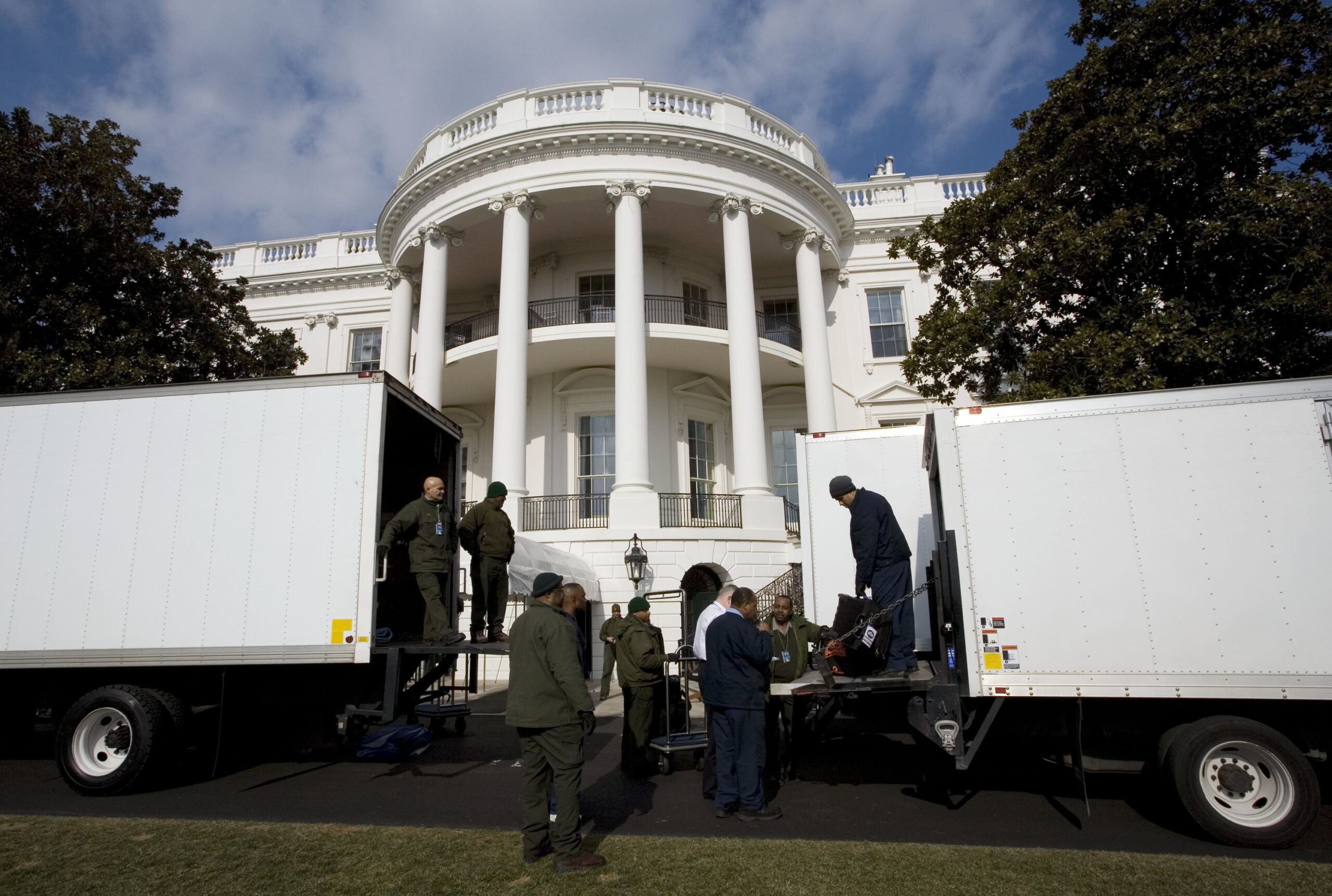
On Jan 20, Trump’s furniture will be completely moved out of the White House in five hours.
When Biden is sworn into the presidency on Inauguration Day, Trump will become a civilian.
If Trump attempted to remain, Biden would have the authority as the new commander in chief to order the military or Secret Service to physically remove Trump from the premises.
“The current president’s term ends, period,” on Inauguration Day, Pildes says.
Trump “would be a trespasser at that point.”
One former Secret Service agent said Trump would get dragged out like any other civilian would be if they were in the Oval Office unauthorized.
It could also simply do the equivalent of changing the locks: “When the staff leaves on January 19, don’t let them back into the complex the next day,” another ex-agent said. “He can’t do anything without his staff.”
“I don’t imagine Trump ever conceding, but I do imagine him submitting to defeat,” Douglas says.
The distinction is key, he says; Trump is likely to continue to claim victory even after leaving office so as to keep a strong connection to his supporters—and potentially stage a comeback in 2024.
But what Trump is doing, claiming voter fraud where there isn’t any, is deeply damaging to our Republic.
“Constitutional democracy assumes that people have faith in the integrity of the electoral process and can trust the outcomes,” Douglas says. “If they have the president himself—not some marginal fringe group—telling the people that the system is rigged and the results can’t be trusted, it’s an incredibly dangerous message to spread.”
But has Donald Trump ever cared about anything other than himself?
Bottom line: At noon on January 20, 2021, Joe Biden will become the 46th president.